
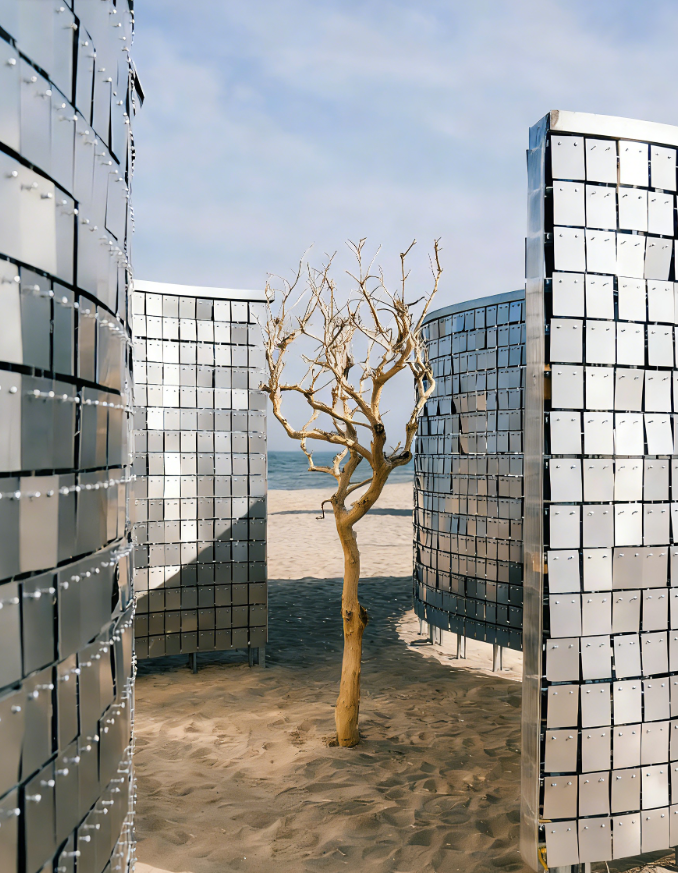
Kinetic Wall Art vs. Traditional Sculpture: Choosing Living Architecture
A decision guide for architects, developers, hospitality brands and cultural venues comparing physical presence, movement, audience engagement, space requirements, procurement, maintenance and long-term value.
The Better Choice Depends on the Role of Art in the Space
Traditional sculpture creates a stable physical presence that viewers can study from changing positions. A moving architectural artwork adds time, rhythm, environmental response or programmed behaviour to the encounter. Neither is automatically more valuable; each supports a different curatorial and operational objective.
A freestanding sculpture may act as a landmark, organize circulation or create a focal point visible from several sides. It can often be understood without power, control systems or operator training. A wall-based kinetic installation uses a large architectural surface while preserving floor area. Its expression can change with wind, light, programmed scenes or visitor presence, allowing the space to feel different throughout the day.
The decision should begin with the desired experience. Does the project need an iconic object, a contemplative material composition, an evolving brand moment, an environmental response or an interactive public encounter? The answer guides location, scale, movement, material, supporting structure and ownership requirements.
Object, Surface and the Dimension of Time
Traditional sculpture is usually experienced through the visitor’s movement around a stable object. Form, texture, material and shadow reveal themselves from different viewpoints. The artwork may establish a strong identity because its shape remains recognizable across photographs, seasons and events. This stability can suit civic landmarks, gardens, atriums and collections where permanence is central.
Moving wall art reverses part of that relationship. The observer may remain still while the surface changes. Highlights travel, patterns reorganize and shadows deepen or disappear. Motion introduces anticipation: viewers wait for the next state and may revisit the work at another time. Passive systems respond to natural airflow, while motorized or interactive pieces can deliver controlled sequences.
Presence and permanence
Strong three-dimensional identity, stable material expression and no dependence on daily operation for the primary experience.
Change and atmosphere
Uses movement, reflection, rhythm and time to transform a wall, facade or interior backdrop.
Stillness with selected motion
Combines a sculptural composition with limited moving zones, lighting or scheduled transformation.
Time also affects authorship. A fixed artwork presents a composed form. A wind-driven piece shares authorship with the environment; each moment varies. An interactive installation shares part of the experience with visitors. A programmed work can move between artist-approved scenes. The owner should understand whether variability is essential to the concept or simply an optional feature.
Compare a Detailed Surface With a Larger Architectural Field
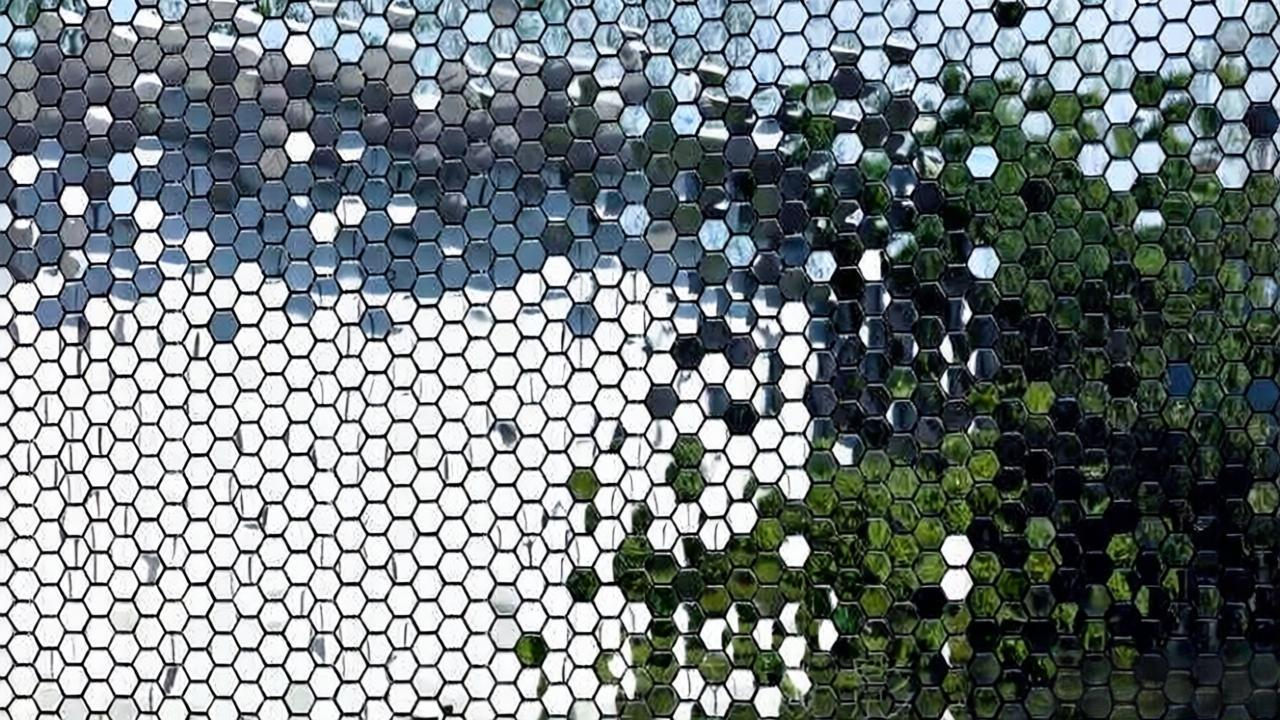
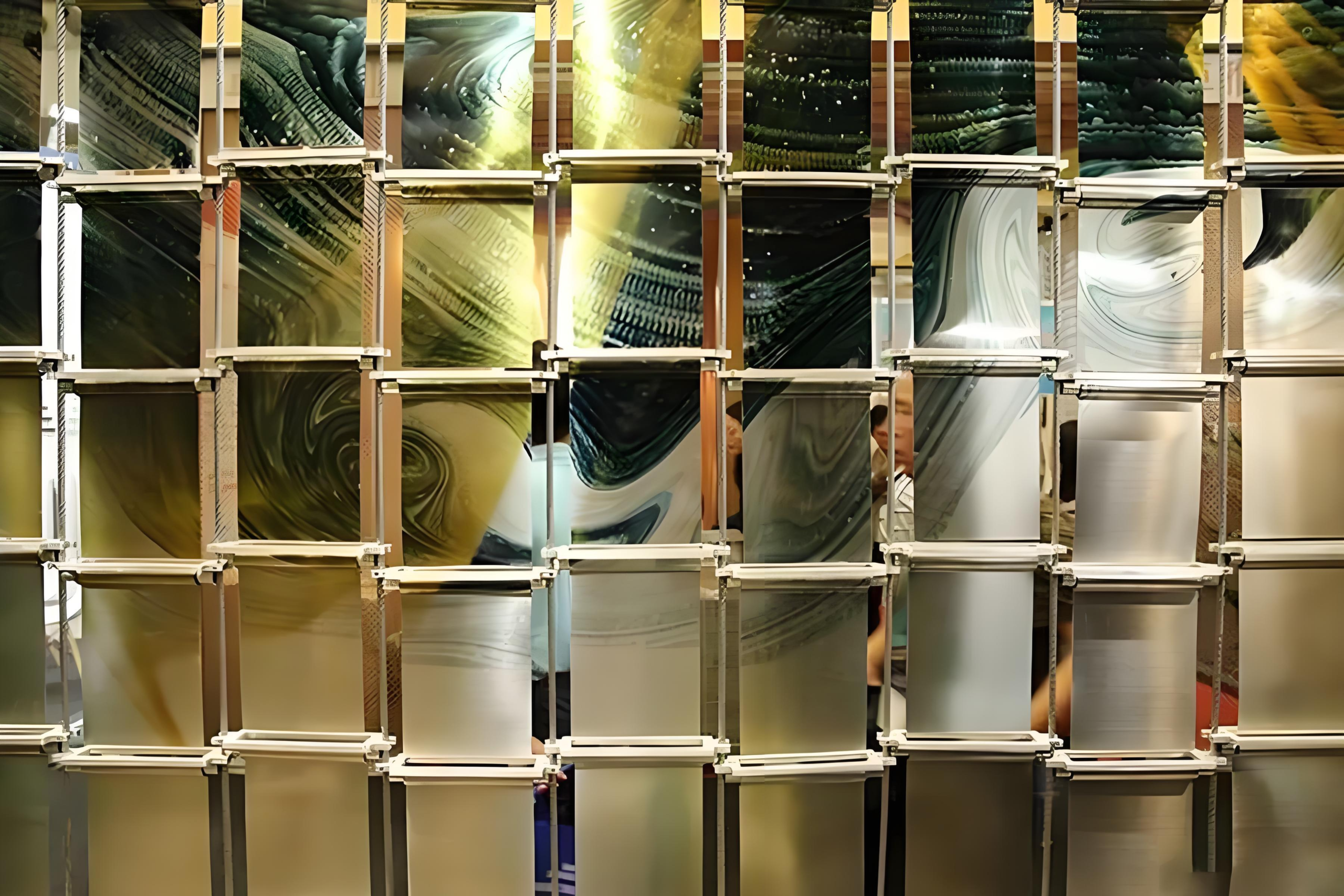
These images are different from those used in the previous optimized articles. They should be read as design references rather than exact performance promises. Photography changes apparent colour, movement and scale. The project team should use images to discuss direction, then review physical samples and a representative prototype.
For every reference, identify what is relevant: panel density, reflectivity, movement character, perimeter treatment, visitor distance or integration with the building. This avoids copying an image without understanding the decisions that created its effect.
Floor Footprint Versus Architectural Surface
A freestanding work requires clear floor area, safe circulation and appropriate viewing distance on several sides. It may need foundations, plinths, barriers or integrated lighting. In a generous atrium, this footprint can help organize the room. In a narrow lobby, retail environment or showroom, the same object may compete with circulation and operational needs.
A dynamic wall uses vertical area and can preserve valuable floor space. It may sit behind reception, along a circulation route, within a double-height void or on an exterior elevation. However, the wall is not depth-free. Frames, pivots, drives, cables, controllers and maintenance access require a coordinated service zone. Moving elements also need a protected envelope.
| Planning question | Traditional sculpture | Moving wall installation |
|---|---|---|
| Primary space | Floor area and views around the object | Vertical surface plus concealed technical depth |
| Visitor relationship | People move around a stable form | The surface changes as people watch or approach |
| Architecture interface | Foundation, plinth, lighting and circulation | Backing structure, perimeter, power, controls and access |
| Future relocation | Possible if size, mass and fixing allow | Usually more closely fitted to a named opening or facade |
| Resting appearance | The final artwork itself | A designed static state when motion is unavailable |
Viewpoint should guide scale. A distant facade needs broad patterns and legible changes. A hotel seating area may benefit from subtle, slow movement and refined material detail. A retail entrance may require a recognizable gesture visible through glazing. Avoid judging every concept from close-up renderings; test the main approach route and typical dwell time.
Circulation also influences safety and engagement. An artwork can invite approach without encouraging visitors to enter a moving envelope. Furniture, queues, doors, cleaning routes and event layouts should be shown during design review. What appears clear on opening day may become obstructed after operational changes.
Mass, Texture, Reflection and Environmental Response
Traditional sculpture often celebrates the inherent mass and permanence of stone, bronze, steel, timber, glass or ceramic. Surface weathering and patina may become part of the artistic narrative. The structural and conservation strategy must suit the material, location and expected public contact.
Moving installations often prioritize a different balance: low mass, stiffness, precise repetition, durable edges and controlled reflection. Aluminium, stainless steel, composites and specialty translucent materials can support large fields of repeating elements. Material properties influence bearings, drives, balance, noise, support reactions and replacement strategy.
Reflective panels multiply light and movement across a space. Small angular changes can produce visible waves even when physical travel is limited. Highly polished finishes may also create glare, fingerprints or unintended reflections of visitors and luminaires. Matte, brushed or coated surfaces provide quieter transitions and can be easier to coordinate in visually busy interiors.
Exterior exposure adds wind, rain, drainage, pollution, corrosion, UV and temperature movement. Passive works may intentionally respond to wind, but the complete assembly still requires site-specific assessment. Material compatibility, water paths, retention and inspection access are as important as face finish.
Material as the message
Suitable when weight, craft, texture and permanence are central to the artwork’s identity.
Light as moving content
Suitable when subtle changes in angle should animate a large surface without digital imagery.
Layered depth
Suitable where openings, backlighting or changing views through the artwork are part of the experience.
Passive, Programmed and Interactive Behaviour
Passive movement uses environmental energy, most commonly airflow. The work changes with real conditions and can communicate a direct relationship to climate. The experience includes calm periods and irregular motion; it should not be presented as a repeatable video sequence. Panel balance, bearings, clearances and retention require engineering appropriate to the site.
Programmed movement offers repeatable scenes, scheduled events and coordination with lighting or presentations. It also introduces drives, power, controls, software, isolation and commissioning. A useful functional description states everyday, event, resting and fault modes. The owner should know which settings staff can use and which remain protected.
Interactive behaviour responds to visitors or external cues. Presence or distance sensing can create local movement, but the interaction must remain understandable and comfortable under crowds. Privacy and network requirements should be reviewed when cameras or connected platforms are proposed. Many experiences can use anonymous sensing without identifying people.
Motion quality depends on acceleration and transition, not only speed. Slow, controlled changes often feel more architectural and produce less abrupt sound. Rapid reversal may suit a short event but become tiring during daily use. Prototype scenes should include repetition, stop, restart and return to rest.
Attention, Dwell Time and Social Sharing
Movement naturally attracts peripheral attention. A changing surface may encourage visitors to pause, watch for a cycle and record video. In retail and hospitality, this can create a memorable arrival moment or branded backdrop. In museums, a responsive piece can invite exploration and discussion about mechanism, perception or environment.
However, attention is not the same as meaningful engagement. A continuously dramatic installation can become visual noise for staff and repeat visitors. Define how often important scenes occur and what everyday mode supports the surrounding activity. Reception, dining, consultation and gallery spaces need different levels of stimulation.
Traditional sculpture can create slower engagement. Visitors discover texture, silhouette and changing views through their own movement. This may suit contemplative settings and collections where the object’s physical authenticity is important. A stable artwork can also be easier to photograph consistently for brand identity and wayfinding.
Accessibility should be considered for both forms. Key content should not depend only on rapid movement, sound or a specific standing height. Clear circulation, seating views, tactile interpretation where appropriate and alternative information can broaden the experience. Interactive triggers should respond to varied movement speeds and mobility devices.
Moving Art Requires a System-Level Risk Strategy
Traditional sculpture has important engineering needs: stability, foundations, lifting points, restraint, sharp edges, climbability and public loads. A moving artwork adds repeated motion, clearances, wear, controls and unexpected behaviour. The risk assessment must reflect mechanism, speed, force, location, visitor proximity and local requirements.
Risk reduction may combine safe geometry, separation, guarding, limited travel, controlled speed or force, detection, retention, access control and operating procedures. Creative sensors should not automatically be treated as safety devices. Qualified project parties must define and validate any safety-related function.
The support system transfers self-weight, operational forces and applicable environmental actions into a verified building substrate. Interface drawings should show reactions, anchor locations, tolerances, adjustment and responsibilities. Decorative wall finishes are not automatically suitable structural support.
Safe states need definition for power loss, controller fault, obstruction, emergency isolation and maintenance. Avoid unexpected automatic restart. Technicians need accessible isolation and a mode that prevents public activation. The project handover should explain permitted resets and escalation routes.
Compare Complete Ownership, Not Only Purchase Price
Traditional sculpture costs may include artist commission, material, fabrication, structural engineering, foundation, transport, lifting, installation, lighting, insurance and conservation. Moving work can include these categories plus mechanisms, controls, electrical distribution, software, sensors, prototypes, commissioning, training and ongoing technical support.
A single price without a scope matrix can be misleading. One supplier may include backing frames, site installation and commissioning; another may quote only factory equipment. Identify responsibility for structure, power, control interfaces, decorative trim, access equipment, freight, testing, documentation and spares.
| Value factor | Questions to ask | Evidence |
|---|---|---|
| Artistic identity | Is the concept distinctive and relevant to the place? | Narrative, sketches, references and approved visual direction |
| Spatial contribution | Does it improve arrival, atmosphere or circulation? | Key viewpoints, plans and contextual visualizations |
| Technical feasibility | Can it be supported, operated and accessed responsibly? | Engineering basis, sections, prototype and responsibility matrix |
| Operational fit | Can staff manage it during normal business? | Modes, interface, training and maintenance plan |
| Long-term relevance | Will the work remain meaningful beyond launch? | Resting composition, durable materials and content governance |
Do not rely on claims that motion automatically produces a financial return. Value may appear through identity, visitor experience, media attention, placemaking or cultural contribution, but the owner should define how success will be assessed. Relevant measures might include dwell time observations, visitor feedback, event use or brand research rather than unsupported universal percentages.
Programme is part of cost control. Allow time for concept development, engineering, samples, prototype review, verified measurement, fabrication, logistics, installation and commissioning. A late decision about finish weight, module geometry or movement can affect several systems at once.
Test the Questions That Renderings Cannot Answer
A finish sample can confirm texture and reflection. It cannot prove movement quality, sound or access. A single moving module can demonstrate mechanism and edge detail, while a group is needed to judge rhythm, synchronization and pattern resolution. A full-height bay may be useful where perimeter details and construction tolerances create the main risk.
Material review
Approve finish direction, edge, reflectivity and relationship with surrounding materials under project lighting.
Motion review
Observe range, acceleration, stopping, repetition, sound and the static resting composition.
Integration review
Confirm backing frame, perimeter, power, controls, service access and replacement sequence.
Write acceptance questions before the prototype is built. Test at the primary viewing distance and under representative lighting and background sound. Include normal operation, event mode, interruption and restart. Invite owner operators and contractors as well as designers; each group notices different risks.
Record approved settings, sample references, photographs and written decisions. If geometry or mass changes later, review the effect on structure, balance, drives and clearances. A prototype is a decision tool, not a substitute for final engineering and coordinated site information.
Turn the Artwork Into an Operable Part of the Building
Site readiness should be verified before delivery. Confirm dimensions, support conditions, access route, lifting method, working area, power and protection of completed finishes. Module and package sizes should suit doors, elevators and turning space. Sensitive surfaces need protection until surrounding trades are complete.
The installation method should cover sequence, temporary support, frame alignment, fixing, module placement, electrical connection, perimeter finishing and inspection hold points. Concealed anchors and cable routes may require records before closure. Trial operation of a representative zone can reveal alignment or acoustic issues early.
Commissioning verifies the complete installed behaviour under normal site conditions. Check clearances, scenes, controls, stops, restart, lighting coordination and visible finish. Record approved settings and outstanding actions. The opening event should not become the first full performance test.
Handover should serve everyday operators and technical personnel. Provide approved modes, start-up and shutdown, cleaning limitations, access instructions, as-built drawings, component references, settings backups, inspection guidance, spare recommendations and contact routes. Documentation must match the installed work.
Training should explain what normal operation looks and sounds like, which actions staff may take and when to isolate the system. Future scene changes require an approval and testing process because timing and movement can affect comfort and mechanical demand.
Plan for Material Ageing and Technical Service
Traditional sculpture conservation focuses on material condition, stability, surface change, contamination and the artist’s intent. Moving artworks require these considerations plus bearings, fasteners, drives, cables, sensors, software and control equipment. The maintenance approach should respect both artistic authenticity and safe operation.
Inspection frequency depends on environment, mechanism, operating hours and public exposure. Vague instructions to check regularly are not enough. The responsible team should define accessible items, observation methods, acceptable condition, records and escalation. Exterior pollution, salt, moisture and wind may change needs; interiors can face dust, fingerprints and long daily schedules.
Replacement strategy should preserve visual consistency. Record material batches, finish process, geometry and orientation. Spare components need suitable storage. If a moving element requires balancing or calibration, interchangeability should not be assumed merely because dimensions match.
Software obsolescence also deserves attention. Store configuration backups and document interfaces. Keep the essential local operating mode independent of unnecessary external services where possible. The owner should know who supports mechanical, electrical and software layers and how faults are assigned.
Questions Before Choosing the Art Form
Answering these questions creates a stronger brief for artists, fabricators and specialist suppliers. It also prevents the project from choosing technology before deciding what the artwork should contribute to the place.
Common Questions From Architects and Developers
Is kinetic wall art always more engaging than sculpture?
No. Engagement depends on concept, placement, material, audience and operation. A powerful stable object can be more meaningful than motion added without purpose.
Does a moving wall save floor space?
It generally preserves circulation area, but requires wall depth, structure, clearances and service access. These needs must be coordinated early.
Can a kinetic artwork operate without motors?
Yes. Passive installations can respond to airflow, but movement varies with real conditions and still requires appropriate engineering, retention and maintenance planning.
Can scenes change for events?
Motorized works can include approved everyday and event modes. Content changes should remain within protected technical limits and be tested before public use.
Which option is easier to maintain?
A static sculpture normally has fewer operational systems. Maintenance still depends on material and exposure. Moving works need both conservation and technical service.
How should proposals be compared?
Use the same design brief and responsibility matrix. Compare artistic relevance, scope, assumptions, engineering, prototype, installation, commissioning, documentation and long-term support as well as price.
Discuss the Right Art Strategy for Your Space
Send the project location, approximate dimensions, visitor journey, reference images and preferred experience. We can help organize a custom moving-wall concept and technical proposal.